



Everything you need to know before hiring one — the real costs, what they actually do, and whether it makes financial sense
Running your own truck is supposed to mean freedom. You pick your lanes, set your schedule, build something for yourself. That part is real.
But somewhere between the open road and the bottom line, most owner operators end up spending 3 to 5 hours a day doing something that isn’t driving. They’re refreshing load boards, cold-calling brokers, negotiating rates on loads that barely cover fuel, and chasing paperwork instead of miles. The truck sits. The clock runs.
That’s the problem a truck dispatch service solves. Not glamorously, not magically — just practically. Someone else handles the hunt. You drive.
This guide covers exactly what dispatch services are, what they do day-to-day, how they compare to load boards, what they cost, and whether the math actually works for an owner operator.
- 3–5 hrs : Daily time owner operators spend hunting loads
- 6–10%: Typical dispatch fee as a % of gross load rate
- $0: Upfront fee with most dispatch-only agreements
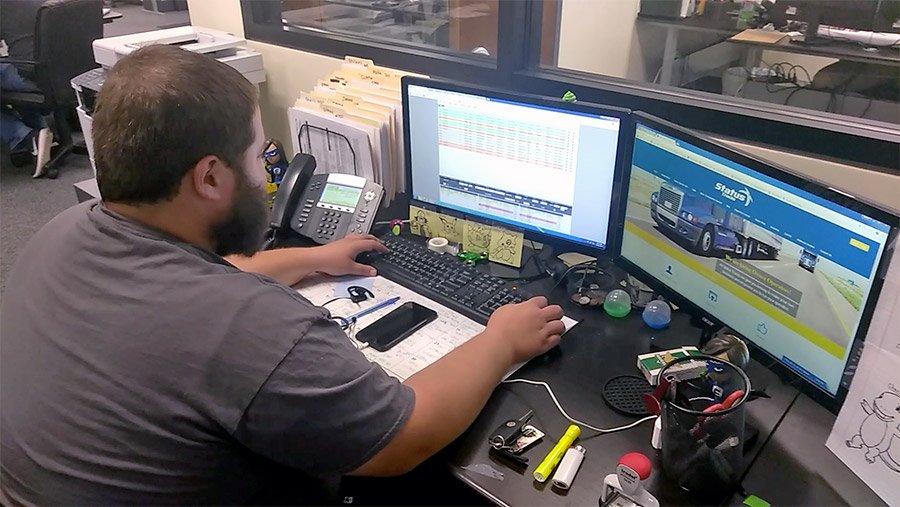
A truck dispatcher working remotely on behalf of an owner operator — handling load negotiations, check calls, and paperwork.
What is a truck dispatch service?
A truck dispatch service is a company — or an individual — that finds freight for your truck, negotiates rates with brokers or shippers, and handles the back-and-forth communication so you don’t have to.
They work on your behalf. They don’t own the freight. They don’t pay you. They act as an intermediary between you and the brokers who have loads to move, and they get paid a percentage of whatever rate they negotiate for you.
This is different from a trucking company. You stay independent. You keep your own authority. You’re not employed by anyone. A dispatch service is a service you hire — month to month, typically — not a carrier you lease onto.
Think of it as outsourcing the business development side of trucking. The dispatcher’s job is to keep your truck loaded with freight that pays well and fits your preferred lanes. The driving, maintenance, compliance — that’s still on you.
What does a truck dispatcher actually do?
The job varies depending on the service you hire, but most truck dispatchers handle some version of the following on a daily basis.
Finding and booking loads
The dispatcher searches load boards like DAT and Truckstop, uses direct shipper contacts, and calls brokers to find freight that matches your truck type, location, and preferred lanes. Once they find something worth booking, they negotiate the rate and send you the load for approval before accepting it.
Rate negotiation
This is where a good dispatcher actually adds money. They know current market rates, they have existing broker relationships, and they’ll push back on low-ball offers you might have accepted just to stay moving. The difference between a dispatcher who negotiates and one who doesn’t can be $200 to $400 per load.
Check calls and driver communication
When you’re on a load, your dispatcher handles check calls with brokers, updates on delays, and any issues that come up mid-trip. You call them — they handle the broker. That keeps you focused on driving.
Paperwork and documentation
Most dispatch services handle rate confirmations, BOLs, and help with factoring or invoicing. Some will coordinate directly with your factoring company. This alone saves a lot of back-and-forth at the end of each week.
How is a dispatch service different from a load board?
This is probably the most common question owner operators have when they first look into dispatch. A load board is a tool. A dispatch service is a person (or team) doing the work of using that tool on your behalf — and doing a lot more besides.
| Feature | Load Board (DIY) | Truck Dispatch Service |
|---|---|---|
| Who finds loads | You search yourself | ✅ Dispatcher searches for you |
| Rate negotiation | You negotiate directly | ✅ Dispatcher negotiates on your behalf |
| Broker relationships | You build them yourself over time | ✅ Access to dispatcher’s existing contacts |
| Check calls | You handle them while driving | ✅ Dispatcher handles them |
| Paperwork support | ❌ None — you handle it all | ✅ Rate cons, BOLs, factoring coordination |
| Time required per day | 3–5 hours of admin work | You drive, dispatcher handles the rest |
| Cost | $50–$200/month for board subscription | 6–10% of gross load revenue |
| Load quality control | ❌ Fully on you to vet loads | ✅ Dispatcher pre-screens for rate and fit |
| Best for | Operators who enjoy the business side | Operators who want to maximize drive time |
Load boards aren’t bad. DAT and Truckstop are tools every serious owner operator should understand. The issue isn’t the tool — it’s the time it takes. Searching loads, making calls, getting rejected, calling again, negotiating, confirming — that cycle repeated 5 or 6 times a day adds up fast. A dispatcher collapses that time down to almost nothing on your end.
How much does a truck dispatch service cost?
Most truck dispatch services charge between 6% and 10% of the gross load rate. Some charge a flat weekly fee instead, typically $150 to $350 per week per truck depending on the service level.
There’s usually no upfront fee or long-term contract for dispatch-only services. You pay per load moved or per week active. If your truck sits due to maintenance, you don’t owe anything.
A quick example of how the math works
Say you average $2,800 per load and run 3 loads per week. That’s $8,400 gross weekly. At an 8% dispatch fee, you’re paying $672 a week for dispatch services.
Now ask what you were losing before: 20+ hours per week of admin time, loads you couldn’t find or negotiate well, deadhead miles from bad lane management. If a dispatcher adds even half a load per week in additional revenue through better negotiation and faster booking — that’s $1,400 in gross revenue against $672 in fees. The math usually works in the driver’s favor.
Is a dispatch service worth it for owner operators?
For most owner operators running their own authority, yes. Not for all of them — but for most.
If you genuinely enjoy the broker side of trucking, you’re good at negotiations, and you already have strong relationships with shippers who give you consistent freight — you probably don’t need a dispatcher. You’re already doing the job well.
But if you find yourself refreshing load boards at 5am, accepting low-paying loads just to stay moving, or constantly running deadhead miles because you booked a load without thinking about the backhaul — that’s the situation dispatch was built for.
The most common feedback from owner operators who make the switch: they drove more miles, negotiated less, and stopped dreading Sundays when they had to plan the week ahead.
It’s also worth noting what dispatch services don’t do. A dispatcher won’t fix a bad MC number or help you get authority. They won’t manage your IFTA or handle your insurance. And a bad dispatcher — one who sends you anything just to hit their weekly quota — can actually cost you money in poor-paying loads and wasted fuel. Vetting the service matters.
If you want to understand the full picture of what working with a professional service looks like, the OIG Dispatch homepage walks through the model in detail.
Frequently Asked Questions
Yes. A truck dispatch service works for carriers with their own MC number and operating authority. If you’re still leased to a carrier, you don’t control your freight directly — the carrier does. You need your own DOT and MC numbers to hire a dispatcher and book loads in your name.
No reputable dispatcher can guarantee specific rates per mile — the freight market moves daily based on supply, season, and lane. What a good dispatcher does is negotiate toward current market rates and avoid the low-ball offers that show up on public load boards. Rates on publicly visible boards tend to be lower because the broker already tried to place the load and failed; dispatchers with broker relationships often access loads before they hit the board.
A freight broker connects shippers (companies who need cargo moved) with carriers. They take a cut from the shipper’s payment and pass the rest to the carrier. A dispatcher works for the carrier — for you. They have no financial relationship with the shipper. Their job is to get you the best available rate on loads that fit your truck and lanes. The broker is on the other side of the negotiation; the dispatcher is on your side.
A few things to check: they should be transparent about their fee structure upfront, have no long-term contract locking you in, and be willing to show you sample rate confirmations or explain how they find loads. Avoid services that promise guaranteed rates, require large upfront payments, or won’t give you references. Most professional dispatch services operate month to month with no cancellation penalties — that structure keeps them accountable.
Stop hunting loads. Let OIG do it for you.
We handle the broker calls, rate negotiations, and paperwork. You drive. No long-term contracts, no upfront fees.